Ferry from Los Cristianos to San Sebastián de La Gomera
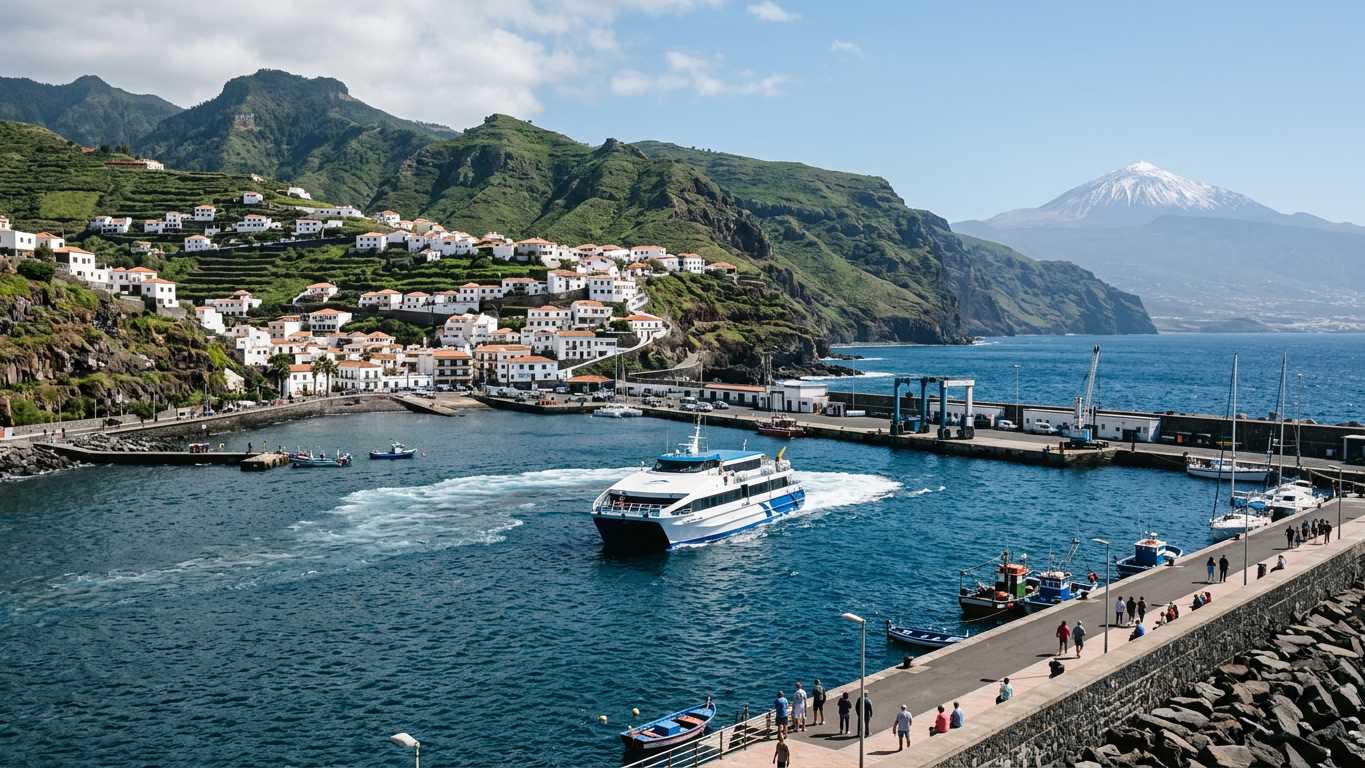
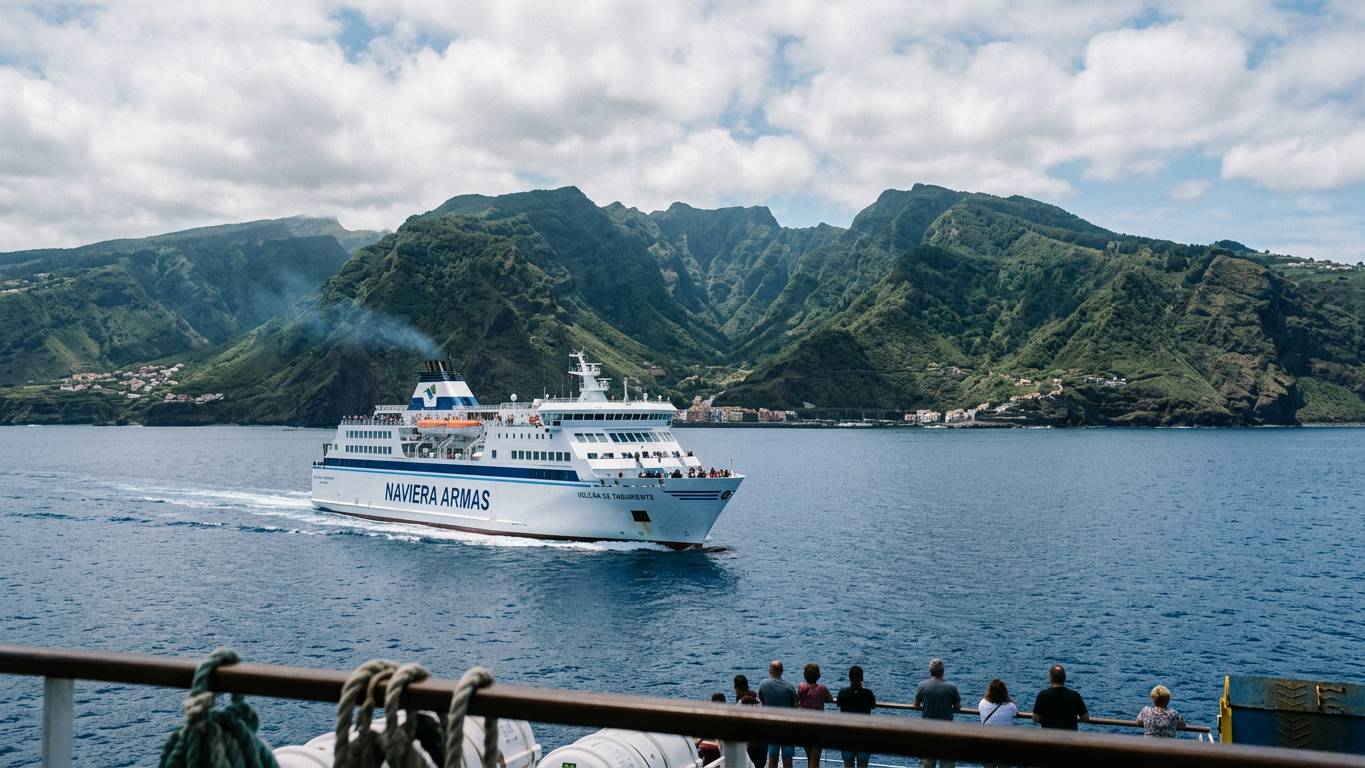
The main ferry route connecting the two islands runs between Los Cristianos harbour in southern Tenerife and San Sebastián de La Gomera. Multiple departures operate daily throughout the year, with the crossing taking approximately 50 minutes. Two ferry companies serve this route with modern vessels equipped with indoor seating, outdoor decks and on-board cafeterias.
Morning departures from Los Cristianos typically leave between 8:00 and 10:00, with return sailings from San Sebastián in the late afternoon or early evening. You can purchase tickets online in advance or at the harbour ticket offices, though booking ahead during peak season ensures your preferred departure time. Vehicle spaces are limited on each sailing, so travellers planning to take a hire car across should reserve well in advance.
The ferry terminal in Los Cristianos sits close to the town centre, within walking distance of hotels in the area. If you're staying further north along the coast, the journey to Los Cristianos takes about 20 minutes by car from Costa Adeje or around 90 minutes from Puerto de la Cruz on the northern coast.
Guided La Gomera Day Trip Tours
Most organised day trips include the return ferry crossing, coach transport around the island, a guide and lunch at a local restaurant. Tours typically depart from major resort areas in the south, with pick-up services from hotels in Costa Adeje, Playa de las Américas and Los Cristianos included in the price.
A typical guided itinerary covers San Sebastián briefly before heading into the interior to visit Garajonay National Park, stopping at viewpoints overlooking Valle Gran Rey or the northern coast, and including a demonstration of Silbo Gomero, the island's traditional whistled language. Total duration runs from early morning until evening, with return to your hotel typically around 19:00 or 20:00.
Group sizes vary by operator, with standard coach tours carrying 40-50 passengers and smaller minibus options accommodating 15-20 people. The smaller groups generally allow for more flexibility with stops and more interaction with the guide. Check the current price when booking, as rates differ between budget coach tours and premium small-group experiences.
| Tour Type | Group Size | Flexibility | Price Range |
|---|---|---|---|
| Standard coach tour | 40-50 passengers | Fixed schedule | Budget |
| Small-group minibus | 15-20 passengers | Some flexibility | Mid-range |
| Private tour | Your party only | Fully customisable | Premium |
Book La Gomera Day Trips
More on GetYourGuide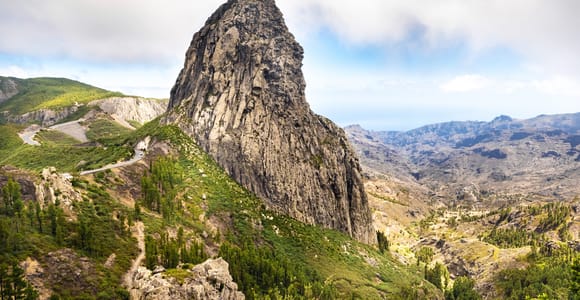 BestsellerGuided tourFrom Tenerife: Guided Tour to La Gomera with Ferry and Lunch10 hours · ★ 4.3 (699 reviews)from €110See availability →
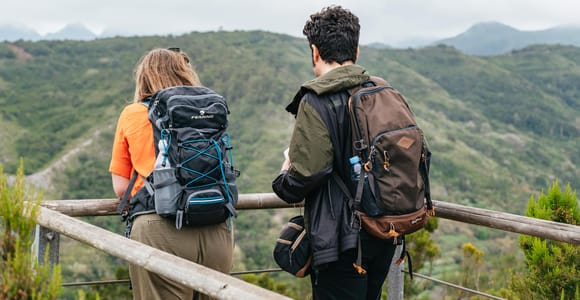 BestsellerDay tripFrom South Tenerife: La Gomera Island Day Trip with Lunch9 hours · ★ 4.1 (2 234 reviews)from €110See availability →
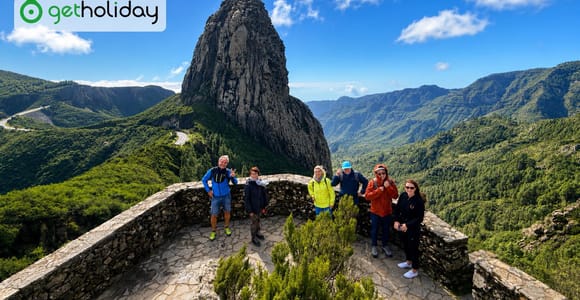 BestsellerDay tripFrom Tenerife: La Gomera Small-Group Day Trip for Up to 1811 hours · ★ 4.6 (242 reviews)from €134See availability →
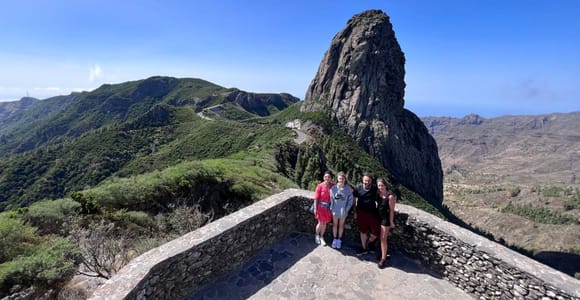 BestsellerGuided tourLa Gomera: Garajonay Highlights Tour for Up to 18 Guests5 hours · ★ 4.4 (112 reviews)from €68See availability →
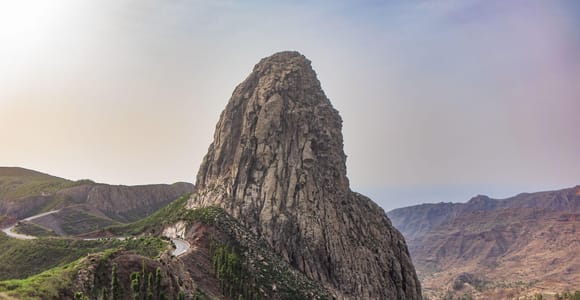 Day tripLa Gomera from Tenerife: Full-Day Guided Tour.10 hours · ★ 4.1 (55 reviews)from €110See availability →
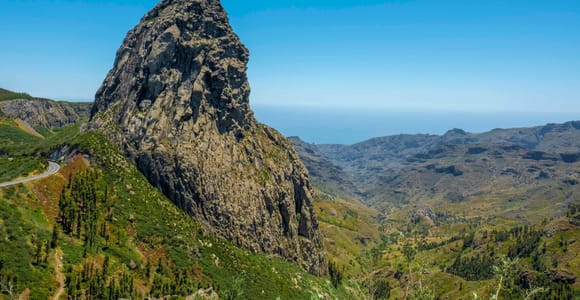 Day tripLa Gomera: Enjoy La Gomera with round-trip transportation from Tenerife12.5 hours · ★ 3.7 (7 reviews)from €115See availability →
Going Independently: Ferry and Hire Car Option
Travelling to La Gomera without a tour gives you complete control over timing and destinations. You can either take just yourself across on the passenger ferry and arrange a hire car on La Gomera, or drive your Tenerife hire car onto the ferry and use it on the island. Most major hire car companies permit their vehicles to travel to La Gomera, but you must inform them in advance and may need to pay a small inter-island fee.
Taking a car across makes sense if you want a full day exploring at your own pace, though it does require booking the vehicle crossing well ahead. Roads on La Gomera are generally well-maintained but narrow and winding, particularly in the mountainous interior. The drive from San Sebastián to Valle Gran Rey takes about 45 minutes, while reaching the northern villages requires an hour or more.
If you're already planning other independent trips around Tenerife such as visiting Masca or exploring Teide National Park, the self-drive approach to La Gomera follows the same principle: more planning required but greater freedom once you arrive.
Garajonay National Park and the Laurel Forest
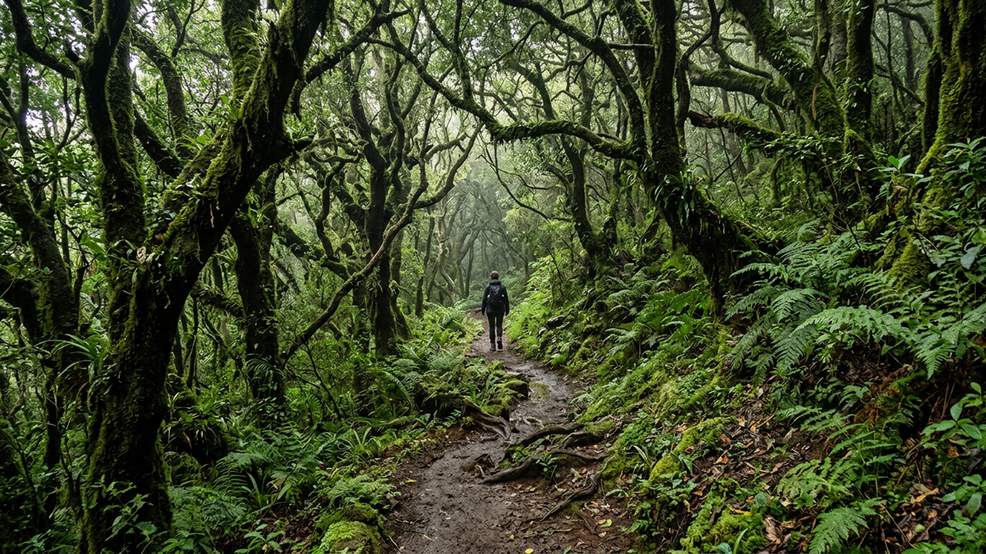
The centrepiece of any La Gomera day trip from Tenerife is Garajonay National Park, a UNESCO World Heritage Site protecting one of the world's best-preserved examples of laurisilva or laurel forest. This ancient forest type once covered much of southern Europe but now survives only in Macaronesia. The trees thrive in the moist conditions created when trade wind clouds meet the island's peaks, creating an almost constant mist in the higher elevations.
The park covers roughly 40 square kilometres across the island's central highlands, with the summit of Garajonay peak reaching 1,487 metres. Multiple hiking trails wind through the forest, ranging from short 30-minute walks to half-day routes. Most guided tours stop at one or two viewpoints and include a brief walk through the forest, typically lasting 20-30 minutes.
Independent travellers can choose from numerous marked trails starting from small car parks along the roads crossing the park. The visitor centre near Las Rosas on the northern approach provides maps and information about current trail conditions. Even a short walk reveals the distinctive character of the forest, with moss-draped trees, dense undergrowth and a cathedral-like atmosphere created by the filtered light.
Valle Gran Rey and Other Highlights
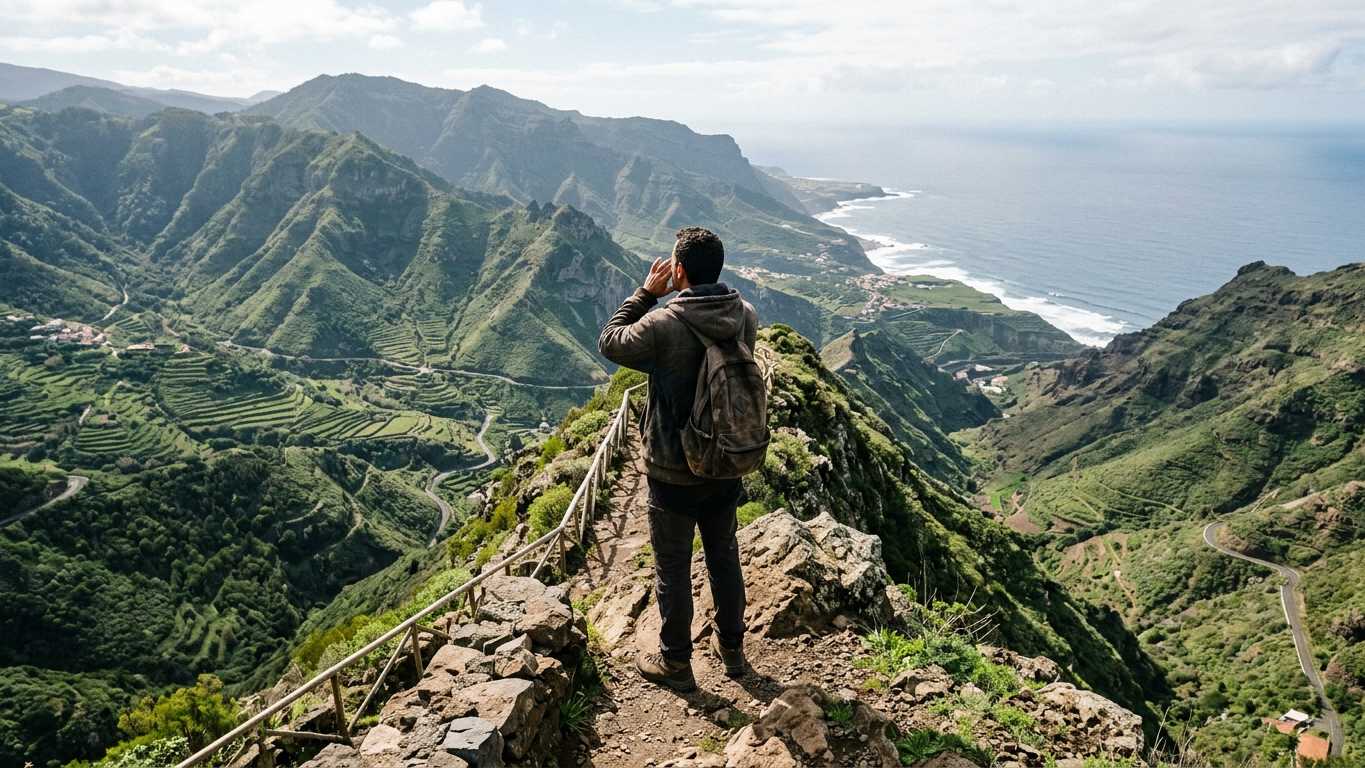
Valle Gran Rey on the western coast offers a striking contrast to the misty forests of the interior. This deep valley descends from the highlands to a cluster of small villages around a rocky coastline, with terraced hillsides bearing witness to centuries of agriculture. Many tours include a lunch stop here or at another coastal village such as Agulo on the north coast.
San Sebastián de La Gomera, the island capital and ferry port, deserves at least a brief exploration. The Torre del Conde, a 15th-century fortification, stands in a small park near the harbour. Christopher Columbus stopped here for supplies before his 1492 voyage, and the Casa de Colón museum preserves that connection. Most guided tours spend 30-45 minutes in San Sebastián, either at the start or end of the day.
The northern villages including Agulo and Hermigua nestle in green valleys facing Tenerife, with Mount Teide often visible across the water on clear days. These communities maintain a quieter, more traditional character than the southern resorts, with narrow streets and stone houses unchanged for generations.
Silbo Gomero: The Whistled Language
Silbo Gomero, La Gomera's distinctive whistled language, developed as a practical solution for communicating across the island's deep ravines and valleys. By whistling rather than shouting, farmers and shepherds could send messages across distances of several kilometres. The language substitutes whistled tones and breaks for the sounds of Spanish, creating a complete communication system audible far beyond the range of the human voice.
UNESCO recognised Silbo Gomero as Intangible Cultural Heritage in 2009. The language is now taught in island schools and demonstrated for visitors at various locations. Most guided day trips include a short presentation by a silbador showing how the whistles form words and phrases. While few people use Silbo for everyday communication in the modern era, the tradition remains an important part of La Gomera's cultural identity.
Independent visitors can sometimes catch demonstrations at visitor centres or cultural venues, though these aren't always scheduled daily. The Garajonay National Park visitor centre occasionally hosts presentations, and some restaurants in tourist areas arrange demonstrations during lunch service.
Planning Your Visit: Guided Tour or Independent
Choosing between a guided tour and independent travel depends on your priorities and travel style. Guided tours handle all logistics including ferry tickets, transport around the island and lunch, making them convenient if you prefer not to drive La Gomera's winding roads or research routes and stops. The guide provides context about what you're seeing, and you'll cover the main highlights in a structured day.
Independent travel requires more planning but offers flexibility to spend longer at places that interest you most or skip sites that don't appeal. You can choose your own lunch spot, take longer hikes in Garajonay, or explore smaller villages that tours bypass. The trade-off is managing ferry schedules, driving unfamiliar roads and navigating without a guide's commentary.
Consider a guided tour if you're short on time, uncomfortable driving on challenging roads, or want the social aspect of a group experience. Choose independent travel if you enjoy planning your own route, want to hike properly in the national park, or prefer exploring at your own rhythm. Some travellers based in southern Tenerife for a week or more combine different approaches, taking guided tours for some destinations like Mount Teide while exploring others independently.
Practical Information
Most visitors to La Gomera from Tenerife travel as a day trip, but the island repays longer stays with excellent hiking, quiet coastal villages and a distinctly different atmosphere from its larger neighbour. Day-trippers should expect a long but full day, typically 11-12 hours from hotel pick-up to return.
Weather on La Gomera varies significantly with altitude and orientation. The southern coast and Valle Gran Rey enjoy warm, dry conditions similar to southern Tenerife, while the northern slopes and the cloud forest around Garajonay can be cool and misty even when the coast is sunny. Bring layers and a light waterproof jacket if you plan to spend time in the highlands.
The island has fewer facilities than Tenerife, with limited cash machines outside San Sebastián and Valle Gran Rey. Most restaurants accept cards, but carrying some cash is advisable. Mobile phone coverage is generally good in populated areas but can be patchy in the mountains and along remote coastal roads.
Ferry schedules occasionally change due to weather, particularly during winter when Atlantic swells can affect sailings. This is rare but worth considering if you're on a tight schedule. Tour operators typically have contingency plans for weather-related cancellations. If you're travelling independently and miss a return ferry, accommodation options exist in San Sebastián and other towns, though booking ahead is always preferable.
Frequently asked questions
How long is the ferry from Tenerife to La Gomera and where does it leave from?
The ferry from Tenerife to La Gomera takes approximately 50 minutes and departs from Los Cristianos harbour in the south of Tenerife, arriving at San Sebastián de La Gomera. Multiple sailings operate daily throughout the year, with morning departures typically between 8:00 and 10:00. Two companies run the route with modern passenger and vehicle ferries.
Is it better to take a guided tour to La Gomera or go independently with a hire car?
Guided tours offer convenience with all logistics handled including ferry, transport, guide and usually lunch, making them ideal if you're short on time or prefer not to drive challenging mountain roads. Independent travel with a hire car gives you flexibility to explore at your own pace, spend longer hiking in Garajonay National Park and visit places tours don't reach, but requires more planning and confidence driving winding roads. Consider your priorities around convenience versus flexibility when deciding.
What are the main things to see and do on a La Gomera day trip from Tenerife?
The main highlight is Garajonay National Park with its ancient laurel forest, a UNESCO World Heritage Site offering short walks through mist-shrouded trees. Most itineraries include Valle Gran Rey or another coastal village, viewpoints over dramatic valleys, a brief stop in San Sebastián de La Gomera, and often a demonstration of Silbo Gomero, the traditional whistled language. The journey itself through mountainous terrain provides striking scenery throughout the day.
Can I take a hire car from Tenerife to La Gomera on the ferry?
Yes, you can take most hire cars from Tenerife to La Gomera on the ferry, but you must inform the rental company in advance and may need to pay a small inter-island travel fee. Vehicle spaces on ferries are limited, so you need to book the car crossing well ahead, particularly during peak season. Not all rental companies permit inter-island travel, so confirm this when making your reservation.
How much time do you need for a La Gomera day trip and what time will I get back?
A complete La Gomera day trip from Tenerife typically takes 11-12 hours from hotel pick-up to return. Guided tours usually collect passengers around 7:00-8:00 from southern resorts and return between 19:00 and 20:00. The actual time on La Gomera is approximately 6-7 hours after accounting for the ferry crossing and any transfer time to Los Cristianos harbour.
What is Silbo Gomero and will I hear it on a day trip to La Gomera?
Silbo Gomero is La Gomera's traditional whistled language, developed to communicate across deep valleys and recognised by UNESCO as Intangible Cultural Heritage. The language substitutes whistled tones for Spanish sounds, audible over several kilometres. Most guided tours include a demonstration showing how it works, while independent travellers may encounter presentations at visitor centres or cultural venues, though these aren't always scheduled daily.
What should I bring on a day trip to La Gomera from Tenerife?
Bring layers and a light waterproof jacket as mountain areas and the cloud forest can be cool and misty even when coastal areas are warm and sunny. Comfortable walking shoes are essential for any forest trails or viewpoint stops. Bring sun protection for coastal areas, some cash as facilities are more limited than Tenerife, and water for the day, though tours typically include drinks with lunch.
Is La Gomera worth visiting if I'm already going to see Teide National Park in Tenerife?
Yes, La Gomera offers a completely different landscape and atmosphere from Teide National Park. While Teide features volcanic terrain and high-altitude desert, La Gomera is known for its ancient laurel forest, deep green valleys and traditional villages. The islands complement each other well, and many visitors to Tenerife include both experiences in their trip along with activities like whale watching from the southern coast.